Conducted between March 22 and April 5, 2024, the surveys used stratified cluster proportional probability sampling.
Out of 6,416 contacted, 27.7% (1,777 people) responded.
People all across South Korea were contacted, except from people on Jeju Island.
Favorite Country
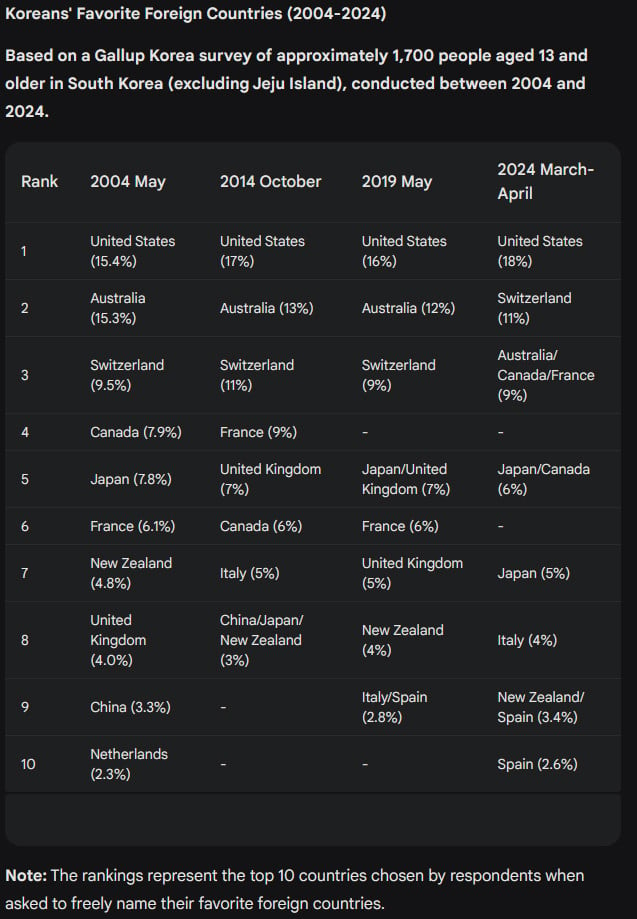
When asked, “Which foreign country is your favorite?”
theUnited Statestopped the list with 18% of the vote.
The UK and Canada tied for fifth at 6%.
The survey also revealed differences by age group.
Interestingly, the USA has consistently been the top choice in four surveys since 2004.
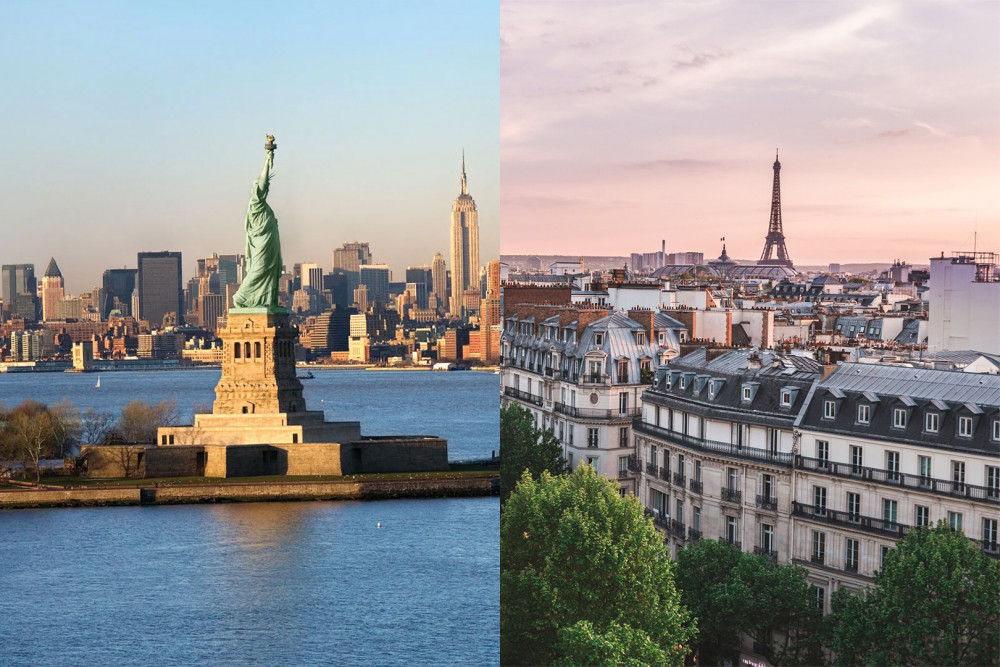
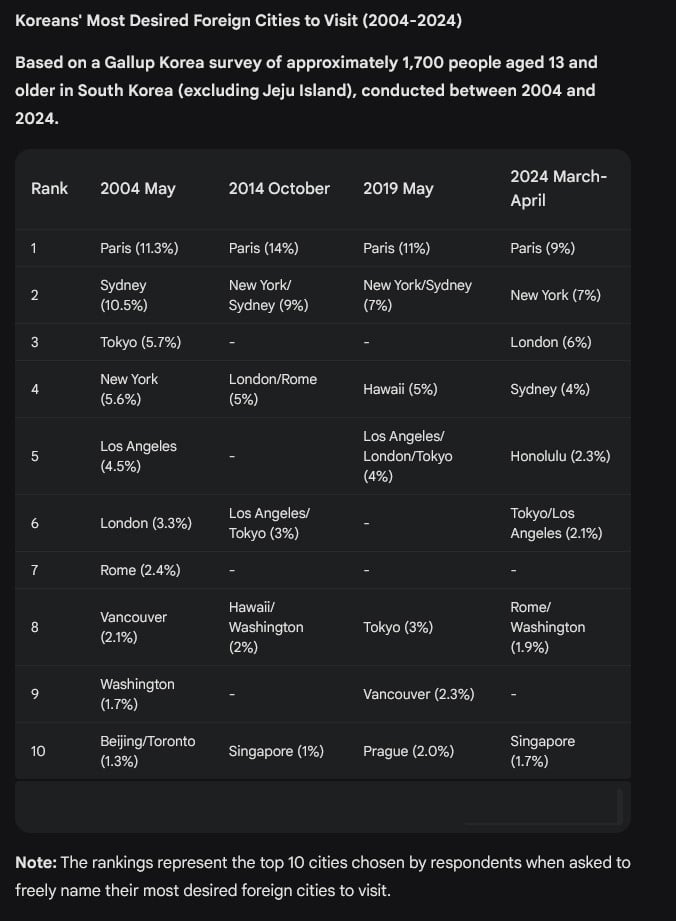
“Paristopped the list with 9% of the vote.
Notably, four U.S. cities made it into the top 10.
The inclusion of four U.S. cities highlights the strong global influence of the United States.
About 30% of respondents mentioned over 140 cities that individually received less than 1% of the vote.
Since 2004, Paris has consistently been the city Koreans most wish to visit.
This trend mirrors the decreasing popularity of Australia as a favorite country.
Favorite Clothing Color
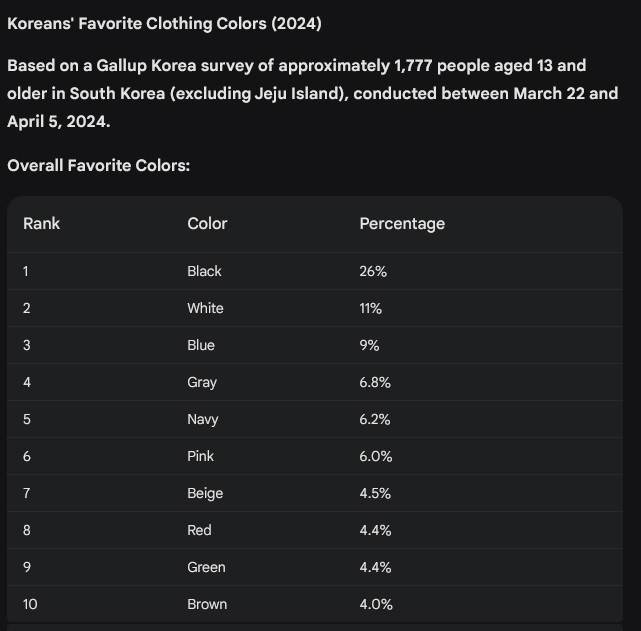
When asked, “What is your favorite clothing color?
“Blackemerged as the top choice, with 26% of the vote.
White followed with 11%, and blue came in third at 9%.
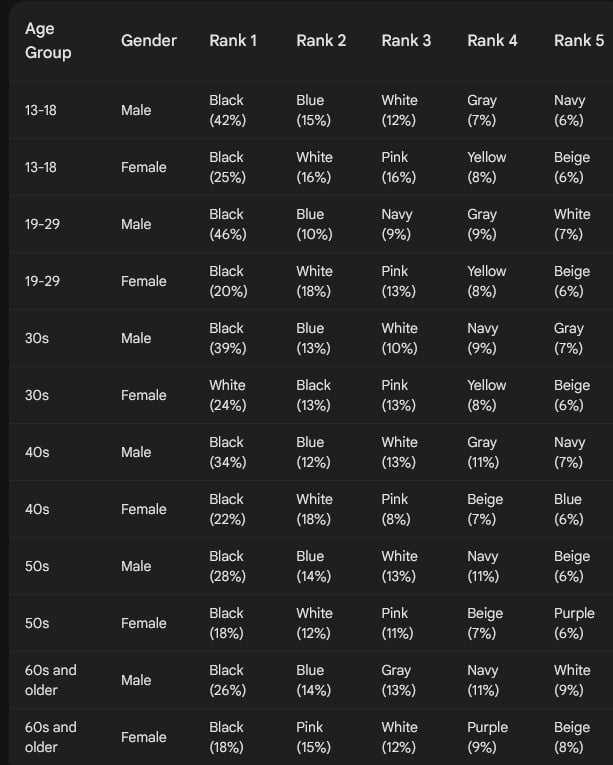
Overall, women showed a preference for a wider variety of colors.
Historically, Koreans were known for wearing white, earning the nickname “the people of white clothes.”
However, by 2024, the most popular clothing color across all seasons is black (26%).
Men in their teens to 30s show an even stronger preference, with around 40% choosing black.
In surveys conducted over the past 20 years, black and white have consistently been the top two choices.
This marks the final set of data from the 2024 survey on “50 Things Koreans Like.”
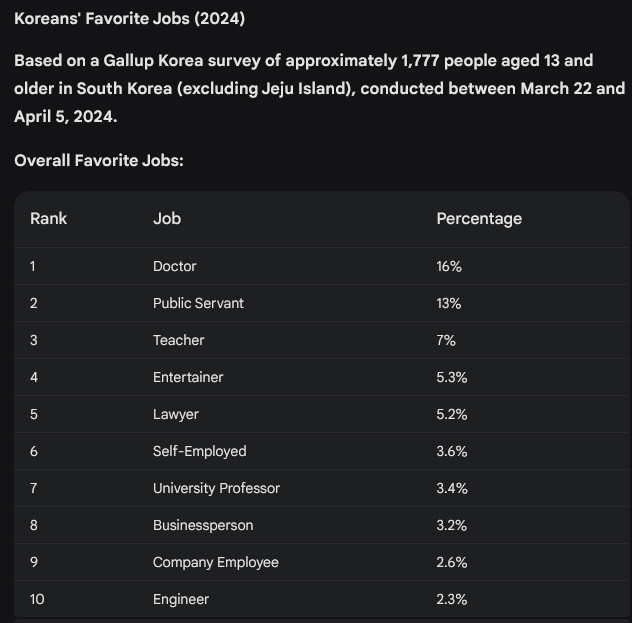
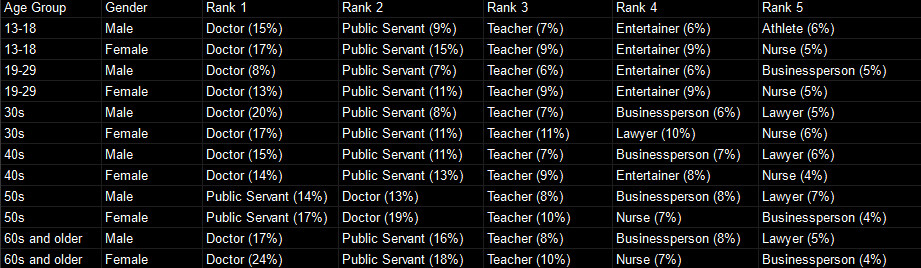
The preference for doctors is fairly consistent across all age groups.
Celebrities, meanwhile, are particularly popular among teenage girls (17%).
In the top career choices for teens and young adults, YouTuber and athlete join celebrity as favorites.
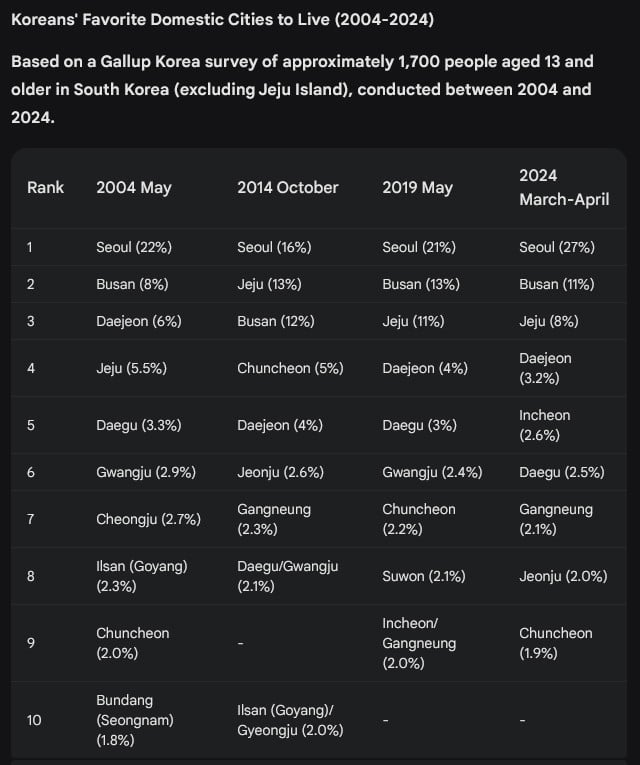
“Seoulcame out on top, with 27% of the vote.
Since 2014, the preference for Seoul has strengthened, while the “Jeju Craze” has faded.
This resurgence is largely driven by residents of the Seoul metropolitan area.
Similarly, preference for Seoul among Incheon/Gyeonggi residents rose from 15% in 2014 to 28% in 2024.
The data also indicate a growing trend toward centralization in Seoul and a depopulation of provincial areas.
This trend has become more pronounced compared to five years ago.
SEE ALSO:A guide to everything you gotta Survive a K-Pop Concert